
BREAST CANCER: Big or small, let's save them all.
- The Apothecaries

- Jul 27, 2020
- 4 min read

BREAST CANCER
What is breast cancer ?
Breast cancer is a type of cancer which forms in the cells of the breast . It can occur in both men and women , but it is far more common in women . It is good to know that breast cancer survival rates have increased and the number of deaths has been declining which is largely due to a number of factors such as; earlier detection, a new personal approach to treatment, and a better understanding of the disease .
The signs and symptoms
Breast cancer usually brings with it symptoms that are hard to miss.
Among these changes include:
# A breast lump/ thickening that feels different from the surrounding tissue. A lump in the breast is the most common sign to identify breast cancer in both men and women. Yes!, Men can also have breast cancer too but apart from a lump in the breast, breast cancer can also cause some changes to areas around the breast.
# Change in the size, shape or the appearance of the breast
# Blood-like discharge from the nipple ; Although it is common for women who are. Breastfeeding to have milk discharge, other discharges could be as a result of the side effect of some contraceptive drugs. However, it is advisable to seek medical attention when discharges other than milk discharge are observed, which could vary in colour from milk to red as these in some cases could indicate the presence of cancerous cells.
#Changes in the texture of the skin around the breast could be noticed. The skin around there could become scaly or look as if it were dry and might even feel thicker than normal and look like the skin of an orange , as in the image below .

# Sometimes, individuals could also experience itching although this is in rare cases.
# A newly inverted nipple
# Peeling, scalping or flaking of the pigmented area of the skin surrounding the nipple or breast
# Redness of the skin over your breast.
THE RISK FACTORS
A breast cancer risk factor is anything that increases your chances of you having a breast cancer. However having one or even several factors doesn't necessarily mean you will develop breast cancer . Many women who develop breast cancer have no known risk factors other than simply being women .
Factors associated with an increased risk of breast cancer include:
# Being Female : Women are prone to having breast cancer than men.
# Aging : Your risk of breast cancer increases as you age
# A family history of breast cancer : If your mother , sister or daughter was diagnosed with breast cancer , particularly at a young age , the chances of you having it is on the high side.
# Radiation exposure : If you received radiation treatment to your chest as a young child or adult ,or even undergoing frequent X-ray scans, the risks of you having breast cancer is high
# Obesity : Being obese increases your risk of breast cancer .
# Postmenopausal hormone therapy: Women who take hormone therapy medications that combine estrogen and progesterone to treat the signs and symptoms of menopause have an increased risk of breast cancer .
Other Risk factors include ;
•Menopause starting at an older age
•Having your first child at an older age
•Consumption of too much alcohol .
Preventive Measures
Making some necessary lifestyle changes may help reduce your risk of breast cancer. In order to practice such lifestyle it is important you try to do the following ;
# Ask your doctor / pharmacist about breast cancer screenings.
# Limit the amount of alcohol you consume.
# Make exercising a daily routine.
# Try to reduce postmenopausal hormone therapy.
# Maintain a healthy weight: You can do this by reducing the number of calories you consume each day and gradually increase the amount of exercise you do.
# Choose a good and healthy diet: The consumption of plant-based foods, such as fruits and vegetables, legumes and nuts along with extra-virgin olive oil and fish may reduce the risk of breast cancer.
*Breast Self Examination Tips*
- Do your BSE 2-3 or even 5 days after your monthly period begins because your breasts are less likely to be swollen or too tender.
- If you are pregnant, no longer have periods or your period is irregular, choose a specific day each month.
- If you find a lump or notice other unusual changes, Don’t panic. About 80% of lumps found are not cancerous. See your doctor promptly for further evaluation.
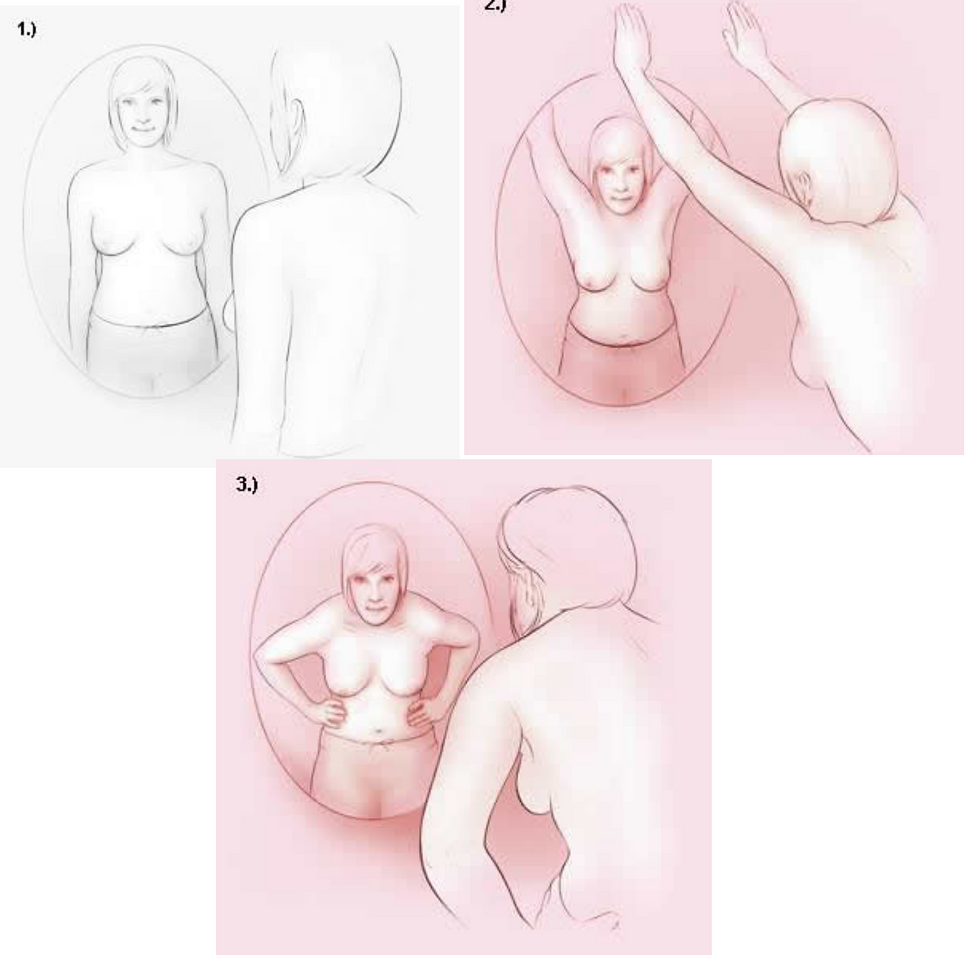
Stand in front of a mirror and look closely at your breasts in the following three positions, viewing from the right and left as well as facing forward. Check for changes in the following:
Shape: Compare one to the other. One breast may normally be larger than the other, but sudden changes in size should not occur.
Skin: Check for rash, redness, puckering, dimpling, or orange-peel-textured appearance.
Nipples: Check for any physical changes such as a sudden inversion, scaliness, redness, itching, swelling, or discharge.
Vein patterns: Look for a noticeable increase in size or number of veins compared to the other breast.
(See image below)

A breast self exam should not replace a Breast Examination. if you develop uncomfortable symptoms, its best to see a doctor as one cannot be too careful.
Remember that Big or small, breast cancer affects all...Every woman is at the risk of having breast cancer and only early detection is the key to surviving it, Examine yourselves today.
By Edward-Tobi Norbert, Egbeh Benedict Chidera and Usidamen Blessing


Comments